Payments, B2B
Vendstash: Business API, Catalog and escrow at checkout
Requirements for a Business API that lets marketplaces and online stores offer escrow at checkout.
- Product
- Vendstash
- My role
- Product Manager
- Focus
- Business API onboarding, payments and escrow rules
Context
Vendstash holds a buyer's money in escrow until the vendor delivers. Used through the website, it only reaches sellers who send buyers a link.
The larger opportunity sits with businesses that already have the buyers: marketplaces, online stores and platforms that want to offer escrow inside their own checkout. In that model the vendor pays nothing and the buyer pays the fee at checkout.
Problem
Growth through the website depends on onboarding vendors one by one. To reach buyers at checkout, the Business API had to let businesses add escrow without us setting each one up by hand. That created two product problems.
- Joining without manual onboarding. Trust is the whole point of Vendstash, so businesses could not simply sign up and start using it. We needed a self-serve way to join that still verified who they were. It also had to work for two kinds of customer: partner platforms whose buyers pay vendors on the platform, and vendors with their own websites.
- Holding money without being a bank. We rely on licensed payment partners and do not hold funds the way a bank does. The escrow rules for when money is held, released and refunded had to work within what those partners support, including which currencies we could offer.
My role
I wrote the requirements and made the product decisions, working with engineering, finance and our payment and KYC partners. Engineering sent me a list of open questions about how money should move, and I answered them across releasing funds, the payment lifecycle, currencies and providers, webhooks, and test versus live.
Key decisions
- Two customer segments, one rule for access. Partners and vendors with their own websites both complete CAC verification before they get a live key. Vendors selling on a partner platform do not need their own KYC, because the partner is the business we verify. This kept the API open to self-serve signup without lowering the bar for trust.
- The buyer releases the money. Funds are held until the buyer releases them, and a partner can step in to release if the buyer has not. Once released, a release is final. If a buyer disputes an order, funds stay held and Vendstash mediation decides whether to refund the buyer or pay the vendor.
- Fees sit with the buyer. Vendors pay nothing and the buyer pays at checkout. Partners share in the revenue, with terms set per partner rather than fixed for everyone, so each partnership can be negotiated.
- Partial release left out of the first version. We already had a requirements document for partial release, but I kept it out of the API's first version. It adds complexity to disputes and refunds, and the first priority was getting businesses to integrate and use escrow at all.
- Start with Naira. Launch is NGN only, through licensed payment partners. USD and CNY stay off until we have a provider that supports escrow. I chose a smaller launch that works over a wider one that fails at the payment provider.
- Exact amounts only. A payment below the amount due does not go through, and an overpayment is held in full, so escrow always matches the order.
- Safe to build against. Businesses get a sandbox with test keys to build their integration. A live key comes only after CAC verification. Merchants receive webhooks across the payment lifecycle: paid, failed, expired, released, refunded and dispute opened.
What I learned
Some rules changed depending on who the customer was: KYC, notifications, payouts and fees. I now start each product decision by asking which customer segment it applies to.
Screens
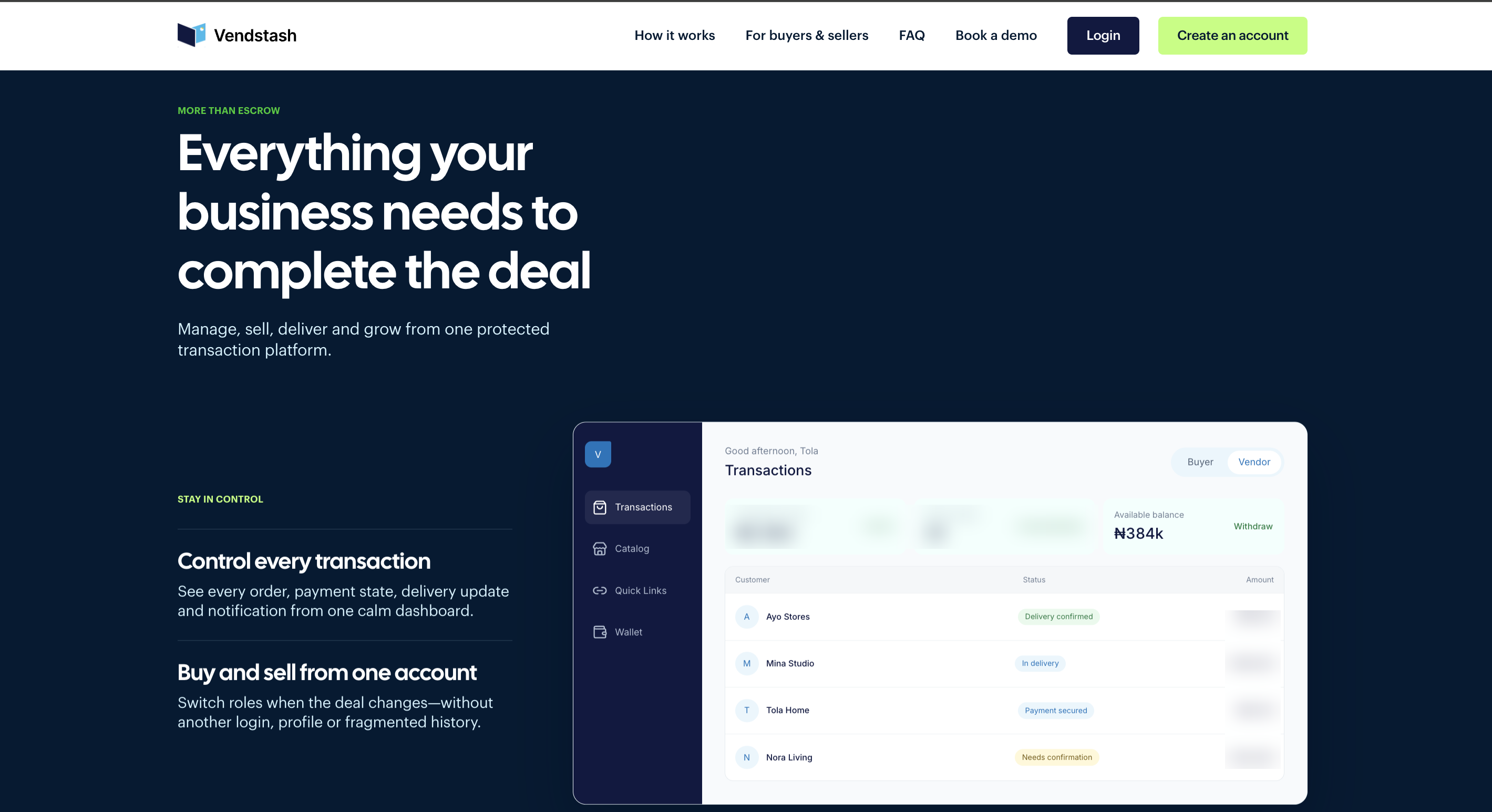
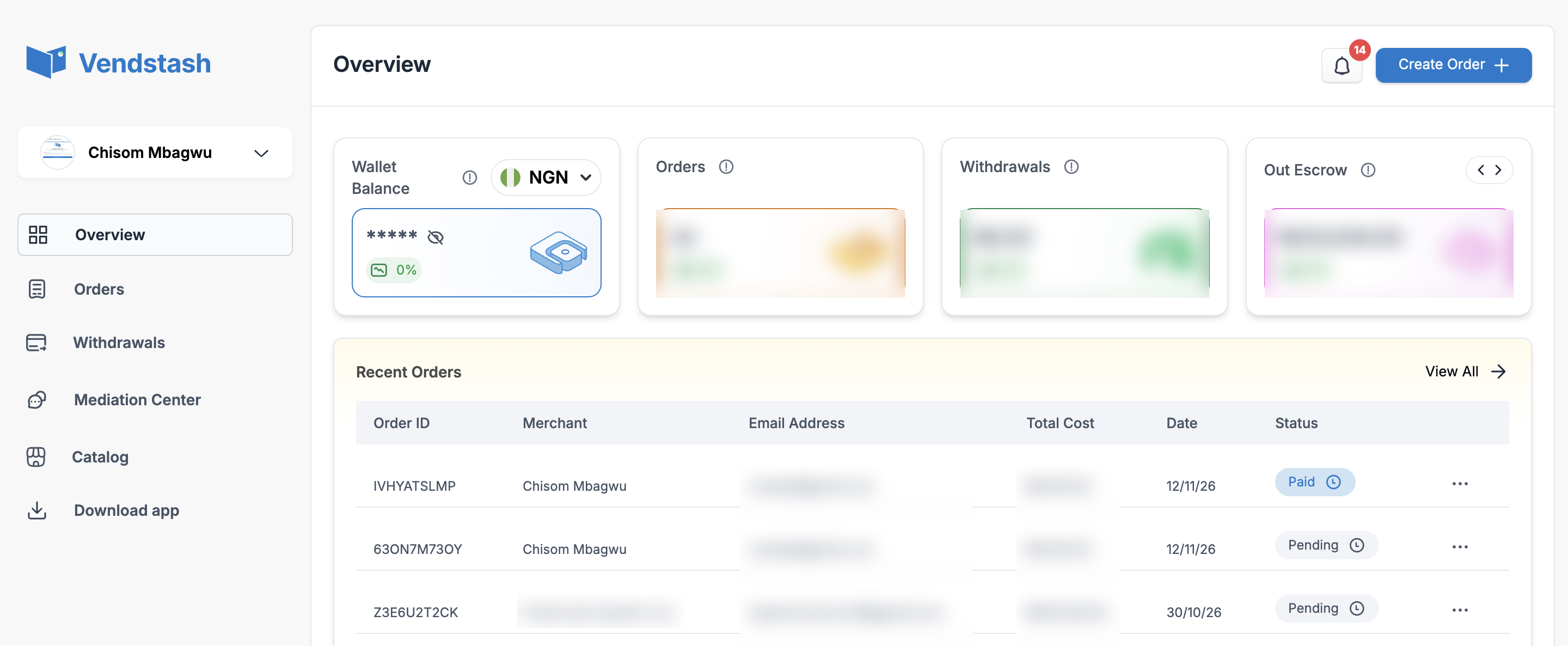
- API product
- KYB and KYC onboarding
- Escrow and payments
- Payment partners
- PRDs