Group savings
Ajowa: validating group savings before engineers built it
I interviewed people, researched the market, built a prototype with an AI tool and tested it with real groups. Before engineers started building anything.
- Product
- Ajowa (formerly SafeCircle)
- My role
- Product Manager: research, product definition, prototype, validation
- Period
- 2026
- Method
- Interviews, market research, AI-built prototype, user testing
Context
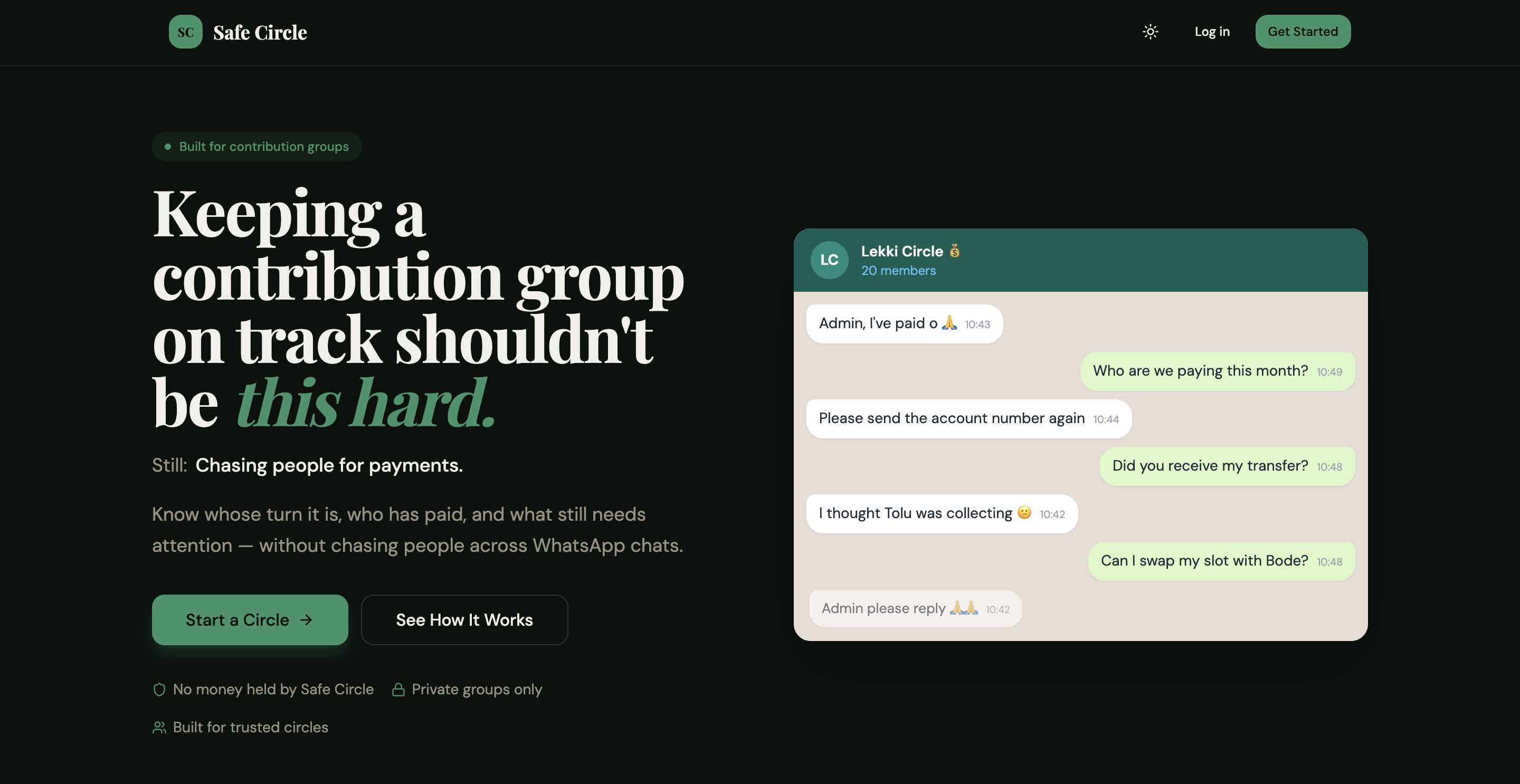
Ajo, also called esusu, is rotating savings. Everyone in a group pays in each cycle and one member collects the full pot, in turn. Millions of Nigerians do it. Most of it runs on WhatsApp chats, notebooks and personal trust.
Problem
Moving money is the easy part. The hard part is everything a trusted group leader does by hand: knowing who has paid, whose turn it is, and what happens when someone does not pay.
Before anyone built anything heavy, the real question was whether people would trade a human organiser they trust for a system.
My role
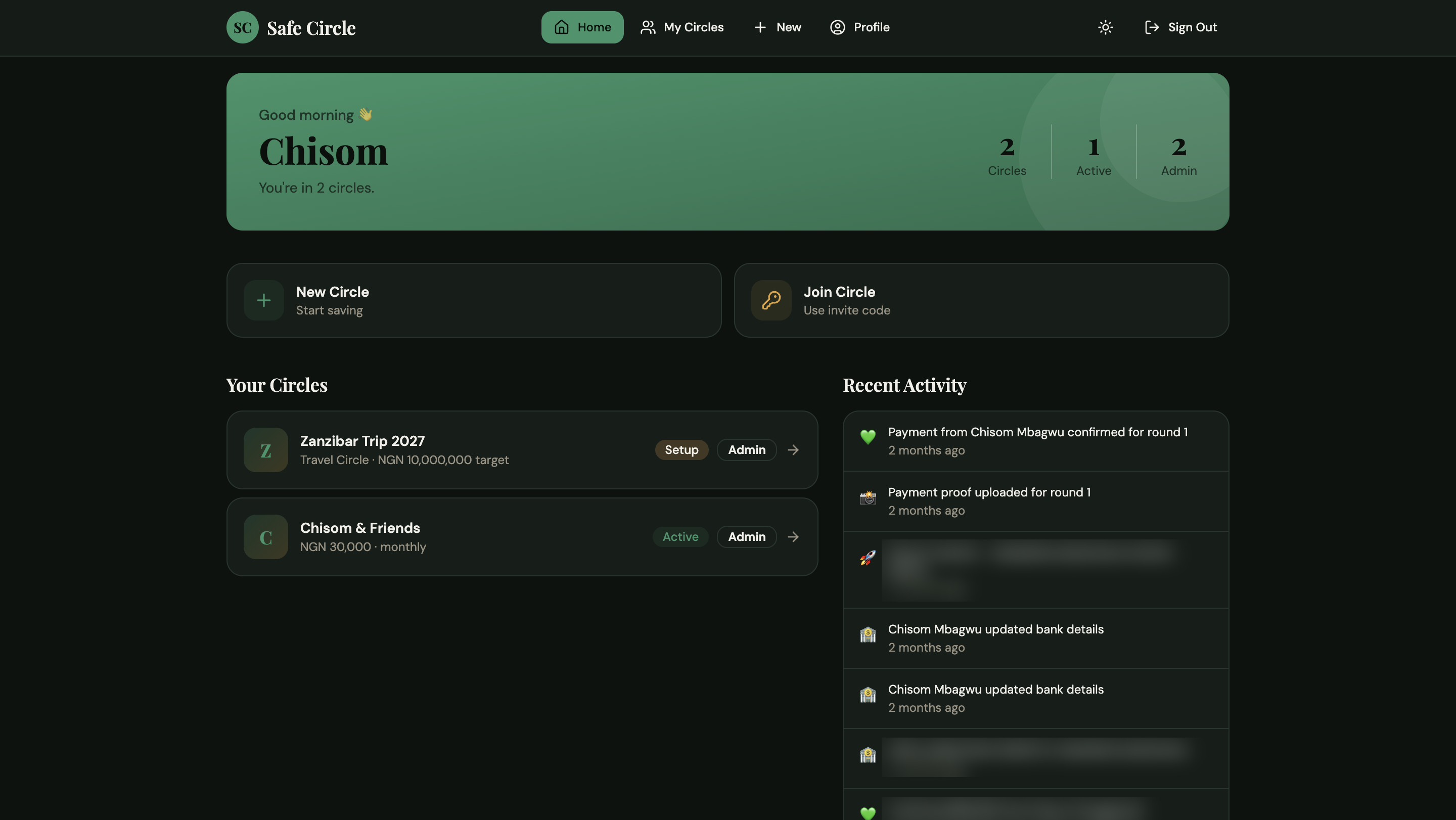
I led the product work through validation. I interviewed people in savings groups, researched existing solutions, defined the rules a digital version needs (membership, contributions, payouts and default handling), and built the prototype myself with an AI app builder so we could put something real in front of users quickly.
Process
I treated the prototype as a way to learn, not as the product.
- Talk first: interviews and market research on how groups run today and where it breaks.
- Build the cheapest thing that can be tested: an AI-built prototype, ready in days instead of a sprint cycle.
- Test with real groups, and let what they did and said change the direction of the product.
Outcome
Testing with real groups validated the need, and user feedback shaped the direction of the product. This was done before engineers started building, based on what we learned from the prototype.
The survey told us where to aim:
- Following up on payments was the most named challenge (32%), ahead of disputes (23%), tracking who has paid (19%), whose turn it is (19%) and trust or security (19%).
- 65% still track contributions on WhatsApp or Telegram.
- 74% said security would be a requirement before they switched.
A small sample is a signal, not a market study. I treat it as direction for the next round of testing, not as proof.
What happens next
I have prepared the QA test plan and the go-to-market plan.
One decision there: start with existing group admins and help them move their groups over, while also reaching people who want to start new groups. Admins-only would be too narrow, because anyone can start a group.
What I learned
The pain is chasing people for money, so one important job the product has to do is to be the one who chases. And as much as there are many savings apps, so many people still do ajo, even people in the diaspora.
Screens
- User interviews
- Market research
- AI prototyping (Base44)
- User testing
- Go-to-market